How PamPam increased playable production speed and boosted engineering throughput by 15–25%
 Alexander Goldybin
Here’s how a mobile games studio (https://www.pampamstudio.com/) made playable creation significantly easier to support while also increasing overall engineering throughput.
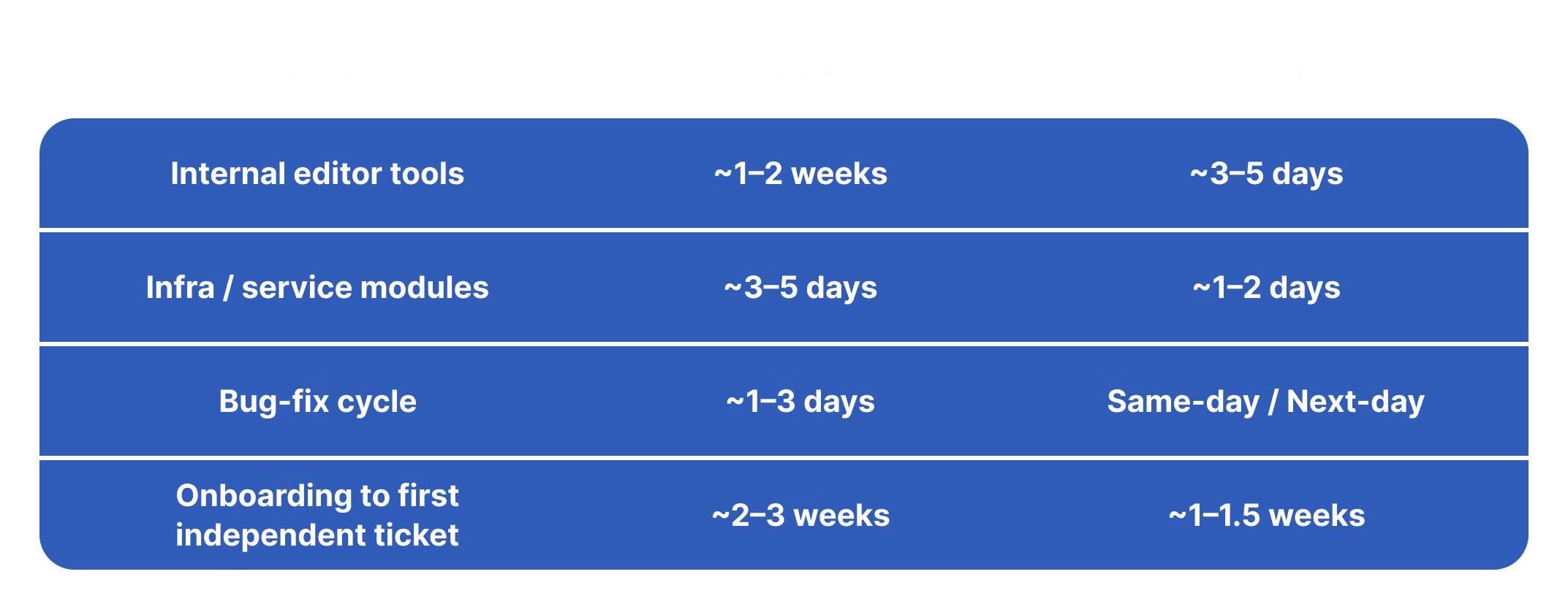
By reducing internal tooling work from ~1–2 weeks to ~3–5 days, collapsing bug-fix cycles to same-day / next-day, and cutting onboarding time roughly in half, PamPam freed up engineering capacity that had previously been locked in repetitive work.
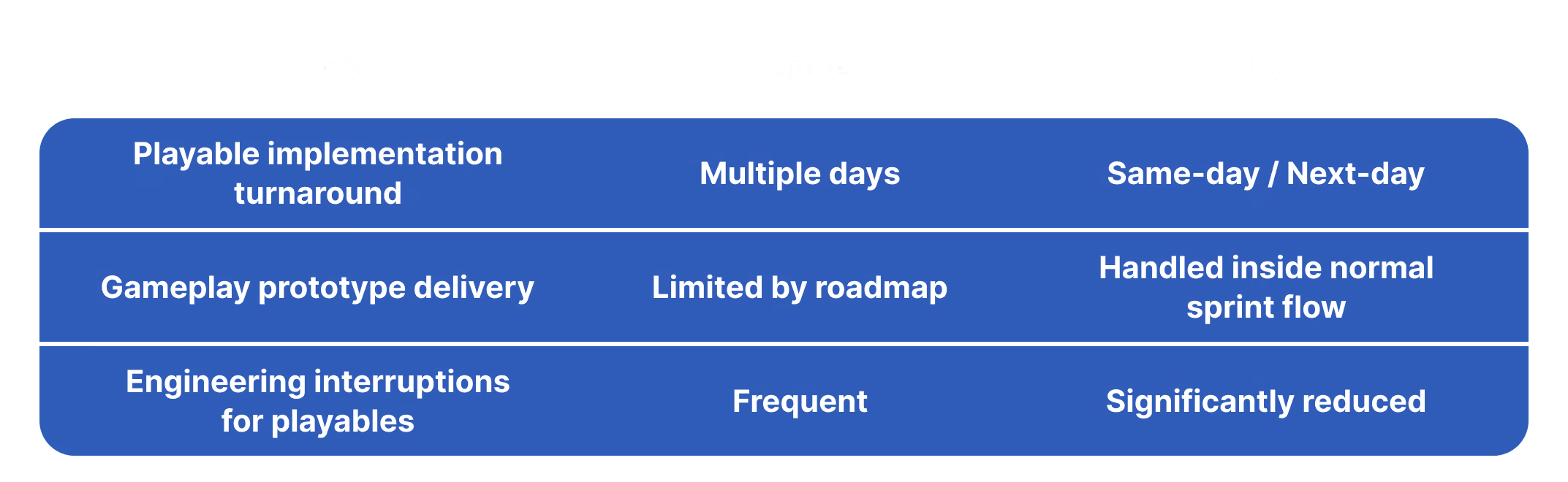
As a result, gameplay experiments and playable-ad implementations became faster to deliver, allowing the team to test more ideas without constantly pulling senior engineers away from roadmap work.
Instead of becoming a separate engineering bottleneck, playable development became a task the team could absorb inside normal sprint capacity.
In this case, you’ll learn the workflow that made it possible.
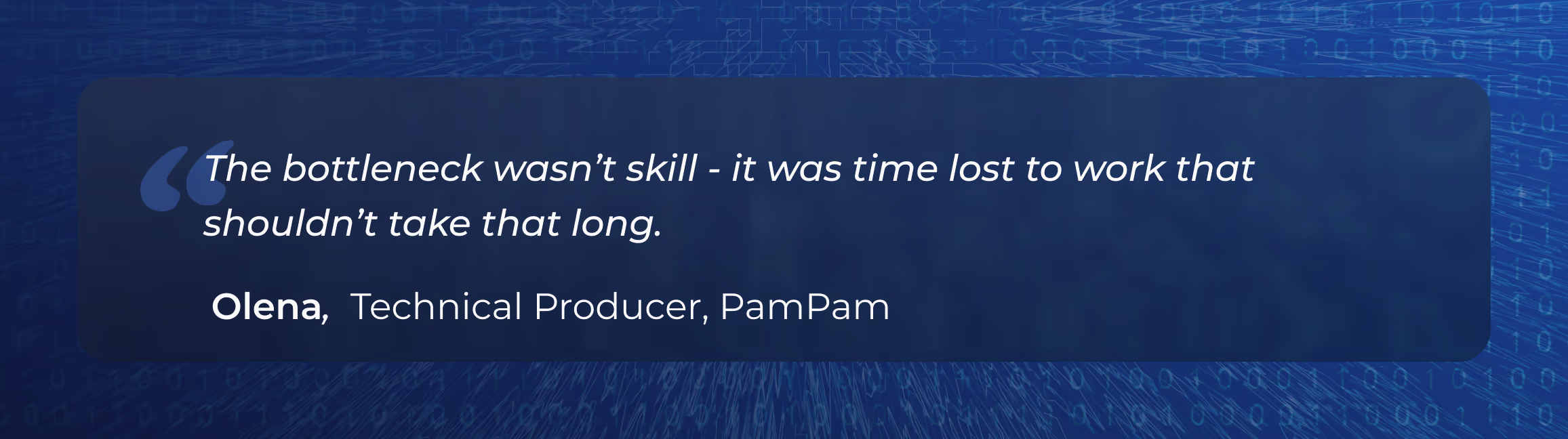
“We always had more tasks than bandwidth for them.”
Dmytro, Engineering Lead, PamPam
Situation
PamPam regularly needed to implement gameplay variations, quick prototypes, and playable-ad concepts to support marketing and UA experimentation.
However, these requests competed with the same engineering resources responsible for:
- roadmap feature development
- live game maintenance
- internal tooling and infrastructure
- performance optimization
In practice this meant:
- internal editor tools consumed 1–2 weeks of senior engineering time
- bug investigations repeatedly pulled engineers away from feature work
- new hires required 2–3 weeks to navigate a complex Unity codebase
- Jobs System / Burst optimizations were repeatedly postponed
- playable implementation tasks often waited for engineering bandwidth
This made fast gameplay experimentation difficult to sustain.
Challenges
Engineering capacity
- editor tools required heavy wiring and iteration
- infrastructure modules accumulated across the codebase
- reusable helper systems were useful but expensive to build manually
Delivery speed
- bug fixing required long root-cause investigation before coding even started
- senior engineers were frequently interrupted by QA escalations
- same-day fixes were difficult to guarantee
Playable development
- gameplay prototypes competed with roadmap work
- playable-ad logic often required custom implementation
- engineers had little capacity for quick-turn gameplay experimentation
Goals
PamPam and Code Maestro aligned around several goals:
- reduce tooling development time by 50–70%
- shorten bug-fix turnaround to same-day whenever possible
- reduce onboarding time to first independent ticket
- make optimization work cheap enough to start
- make playable-ad implementation and gameplay experiments faster to support
- allow engineers to absorb playable-related work without disrupting the roadmap
Approach
Code Maestro was embedded into PamPam’s existing Unity workflow in a single day.
New workflow:
spec / QA report / gameplay reference → CM generates first implementation → engineer reviews and integrates
This approach worked across the engineering tasks that previously consumed the most time:
- editor tooling
- infrastructure modules
- bug fixes from QA reports
- onboarding and codebase exploration
- math-heavy helper systems
- Jobs System / Burst optimization work
Because CM produced strong first-pass implementations, engineers no longer had to start from scratch.
That same workflow also made it easier to implement:
- gameplay variations
- prototype mechanics
- playable-ad logic and integration tasks
“CM gives us a strong first pass. We stay in control - we just move faster.”
Serhii, Tech Lead, PamPam
Results
Engineering delivery impact
Playable creation impact
Because engineers spent less time on repetitive infrastructure work, the team gained more flexibility to support gameplay experiments and playable development.
Business impact
These improvements translated into measurable operational gains:
- senior engineers spent less time in interrupt mode
- QA bugs were resolved before accumulating into sprint debt
- optimization work that had been postponed began shipping inside regular sprints
At the same time:
- gameplay experiments became easier to implement
- playable concepts could be tested earlier
- marketing and UA teams could run more creative experiments without waiting for large engineering windows
“Now we validate solutions instead of spending days just finding where the problem is.”
Dmytro, Engineering Lead, PamPam
Measurable impact
Faster first-pass implementations across multiple task types created a compounding effect across the development workflow.
As a result:
- net engineering throughput increased by 15–25%
- bug-fix capacity per sprint increased significantly
- performance optimization work started shipping inside normal sprint cycles
- playable-related implementation tasks became faster to support
When gameplay ideas and playable concepts become cheaper to implement, teams can run more experiments without expanding engineering headcount.
Make playable development faster and easier to support
Reduce repetitive engineering work, shorten bug-fix cycles, and give your team more capacity for gameplay experiments and playable delivery.
Get Started