How GreenPixel cut event reskin time by 65% and doubled seasonal releases - without expanding the team
 Alexander Goldybin
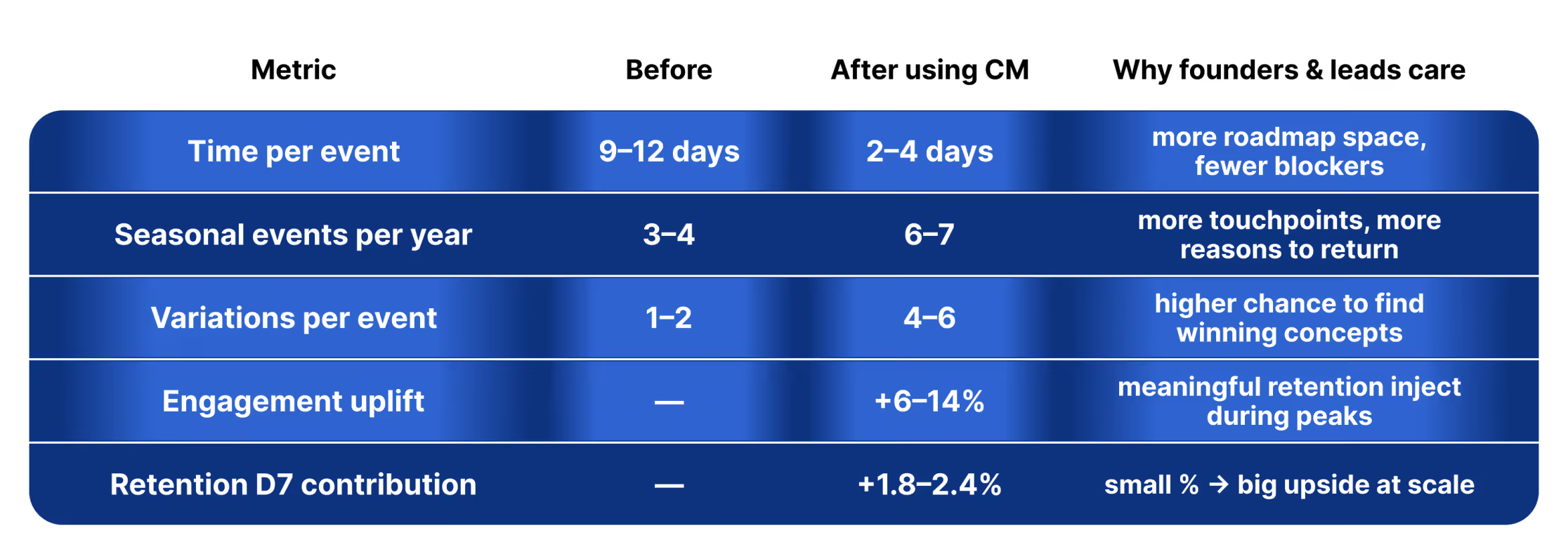
GreenPixel — the studio behind Merge Hotel Empire and other successful merge titles — used Code Maestro to streamline event reskins, reducing prep time from 9–12 days → 2–4 days. Outcome: more seasonal events, more creative testing, higher engagement — same headcount.
Try Code Maestro NOW
Who is GreenPixel
GreenPixel (Limassol, Cyprus) is a mid-size game development studio known for Merge Matters, Merge Hotel Empire and multiple mobile merge/casual hits. With 50–200 people, the studio has a strong focus on seasonal content, live-ops, creative iteration and retention through events.
Seasonal themes and visual refreshes are core to how GreenPixel keeps games alive — but that approach also demands consistent, fast and repeatable delivery.
Play
The challenge
Seasonal content worked — but the preparation process slowed down the calendar.
Before:
- 9–12 days to prepare one event package (visuals, UI, items, backgrounds)
- 3–4 seasonal events per year
- 1–2 visual variations per theme → limited A/B testing
- production bottlenecks between product / art / live ops / marketing
GreenPixel didn’t want to cut corners — they wanted to cut friction.
Leadership needed a way to:
- release more events per year without hiring
- test multiple themes instead of betting on one
- protect quality and artistic control
- unlock creative capacity, not burn it out
Try Code Maestro NOW
What changed with Code Maestro
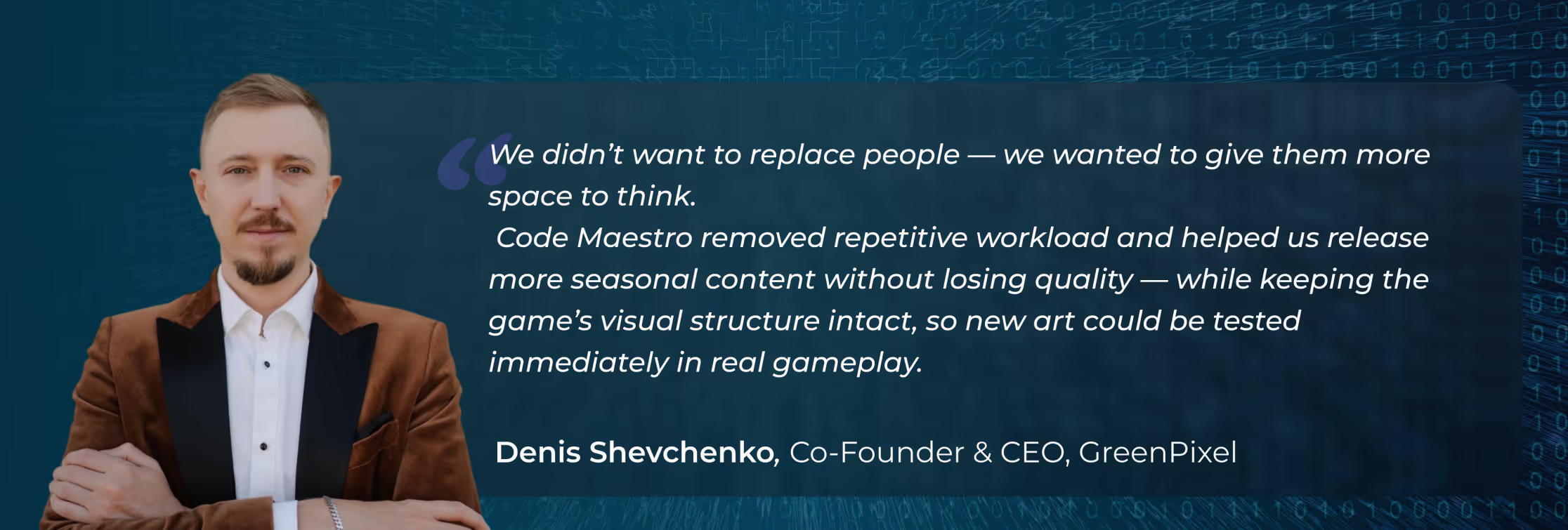
Code Maestro accelerated the repetitive work — without breaking the game’s visual logic.
All reskins preserved original asset ratios, layout proportions, UI spacing and overall art direction, which allowed the team to instantly preview new themes in real builds — without reworking logic or UI layouts.
Accelerated:
- preparation of seasonal visual packages across 4 themes 🎄 New Year / ❤️ Valentine’s Day / 🎃 Halloween / 🐉 Chinese New Year
- structuring & exporting assets under unified rules
- creating 4–6 visual variations per theme for live-ops & marketing tests
- preparation of assets for promo usage and review cycles
- preserving original asset sizes, ratios and visual hierarchy — allowing live preview and instant “try-on” of new art inside the game
Controlled by the team:
- style direction
- IP consistency
- artistic polish & final touch
What stayed intact
- original UI layout and proportions
- item placement and spacing
- visual readability across devices
- game feel and brand consistency
This meant new seasonal art could be applied and reviewed in-context, directly in gameplay — not in isolation.
CM handled the repetition — teams handled the decisions.
Try Code Maestro NOW
Business impact
An important side effect: because asset proportions and layouts stayed consistent, teams avoided secondary rework cycles — no UI fixes, no logic adjustments, no extra QA passes just to “make visuals fit again”.
More attempts + same resources = higher probability of growth.
Why this resonates with studios like GreenPixel
- merge & casual titles live on fresh visual content
- creative leads need space for direction — not file handling
- product & marketing need more attempts to find winners
- leadership needs predictable cadence without inflation of headcount
When repetitive work shrinks, creative work compounds.
Try Code Maestro NOW
The core insight
Reskin is not the value. Fast reskin with preserved structure is.
When visuals can be swapped without breaking layouts or logic, iteration becomes cheap — and cheap iteration scales.
Speed ≠ vanity. Speed = a multiplier on thinking.
Want to test if your team can move faster too?
Try Code Maestro for free and see how fast reskin workflows feel in your pipeline