How PamPam Went From 5 Playable Ads a Month to 20 and Cut Production Costs by 82%
 Alexander Goldybin
Chapter two of the PamPam story. The first one was about engineering throughput. This one is about what a studio does when the limit on its best-converting ad format turns out to be an internal ticket queue.
The numbers first: 4-6 playable concepts a month became 20-24, and the cost of producing one fell 82%. On the campaigns where the winning playables entered rotation, D7 ROAS came in 23% above the previous creative mix and CPI 16% below it. Headcount did not change, and neither did the share of engineering hours the product roadmap gives up to advertising.
Chapter one: the engineers got their time back
PamPam is a Ukrainian studio of 50+ people, making games since 2004 and fully committed to hyper-casual since 2018. Bottle Flip (250M+ installs), Harvest.IO (120M+), Color Adventure (110M+) and five more titles, past half a billion installs between them. They describe their own craft as "simple controls, laconic visuals and a repetitive scenario."
Earlier this year we published what happened when they put Code Maestro into their Unity workflow: engineering throughput up 15-25%, internal tooling work down by half or more, onboarding roughly halved. Their Engineering Lead described the before state in one line: "We always had more tasks than bandwidth for them."
Playable ads were one of those tasks. This is what happened to them next.
Playables kept losing to the backlog
In hyper-casual, a winning creative fatigues in days. You do not out-think that market once. You out-produce it, every week.
Playables should be the sharp end of that machine. Liftoff's 2025 index puts playable impression-to-install at 8-16x non-playable formats, and the gap matters most for exactly this kind of game: when the whole product is a five-second mechanic, letting someone try the mechanic before installing is the closest an ad gets to the product.
PamPam's creative team knew all of that. They still shipped four to six playables a month across eight live titles.
The reason was not budget and not conviction. It was that a playable was a development ticket, and development tickets compete. A playable request sat in the same backlog as the live-ops feature, the SDK update and the bug blocking a release, and it usually lost. Every one that got built cost the roadmap five to seven days of engineering time. At a studio's loaded developer rate that is a four-figure creative before anyone has seen a single test result, and somebody had to decide it was worth that trade in advance.
Studios that outsource playables have a vendor problem. Studios that build them in-house have a queue problem, and the queue is harder to see, because nothing about it shows up as a line item.
"The interesting part was never that playables got faster," their Head of UA says. "It was that we stopped protecting them. When a concept is cheap, you find out in two days that it does not work and you are not annoyed about it. That changes which ideas get tried at all."
The first one took an hour, then half a day
The first attempt was small on purpose. Someone on the creative team took a screenshot of their best-performing video creative for a tap-timing title, dropped it in as a reference, answered a few questions about the core loop and the hook moment, and generated.
The base came back in about an hour, running on PamPam's own art. It was not finished: the win animation was mistimed and the end card did not match their CTA styling.
So an engineer opened the exported HTML and fixed both. Half a day of tuning on something that already ran, against the five to seven days the same build used to sit in a sprint.
Playable examples
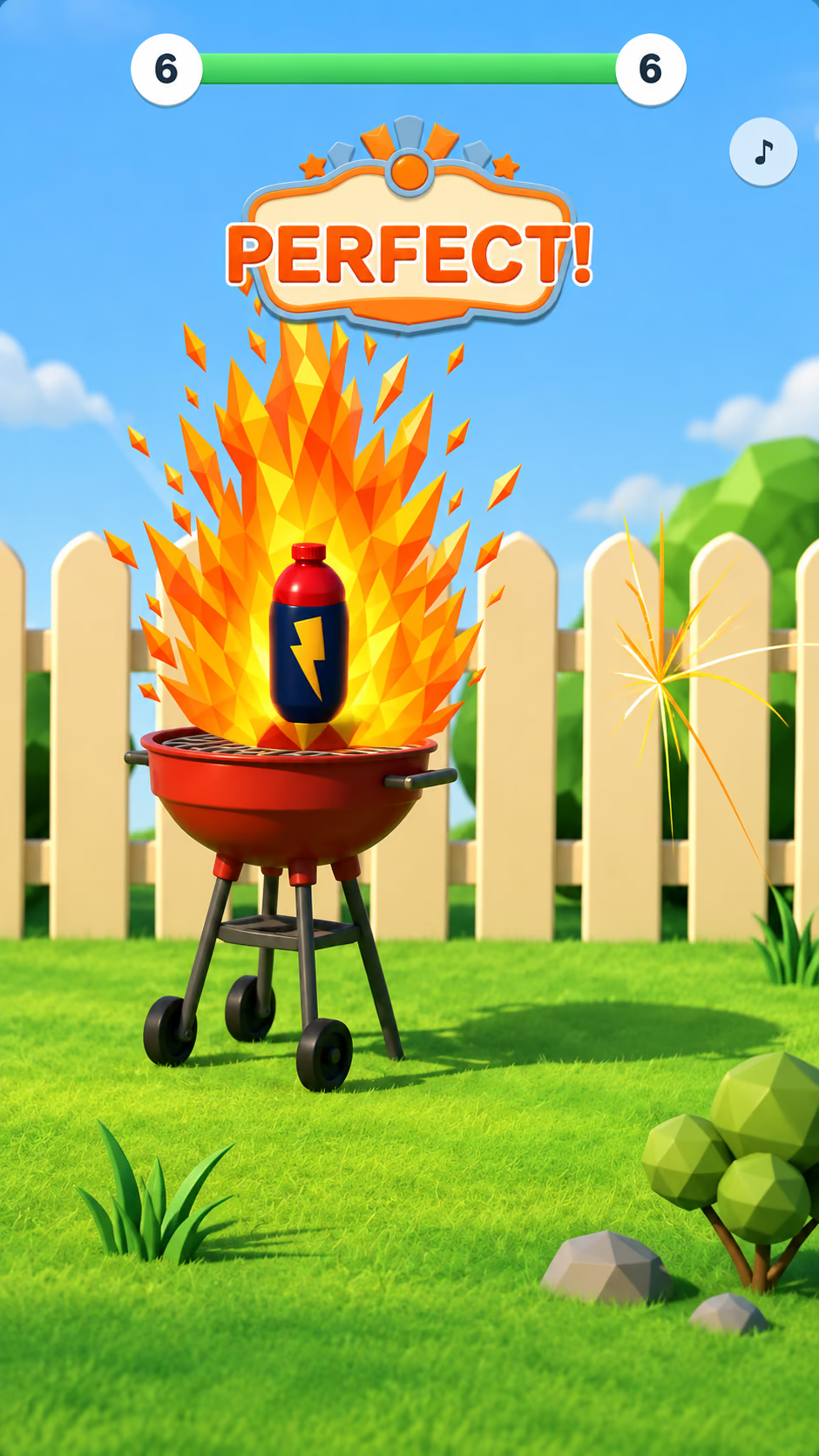
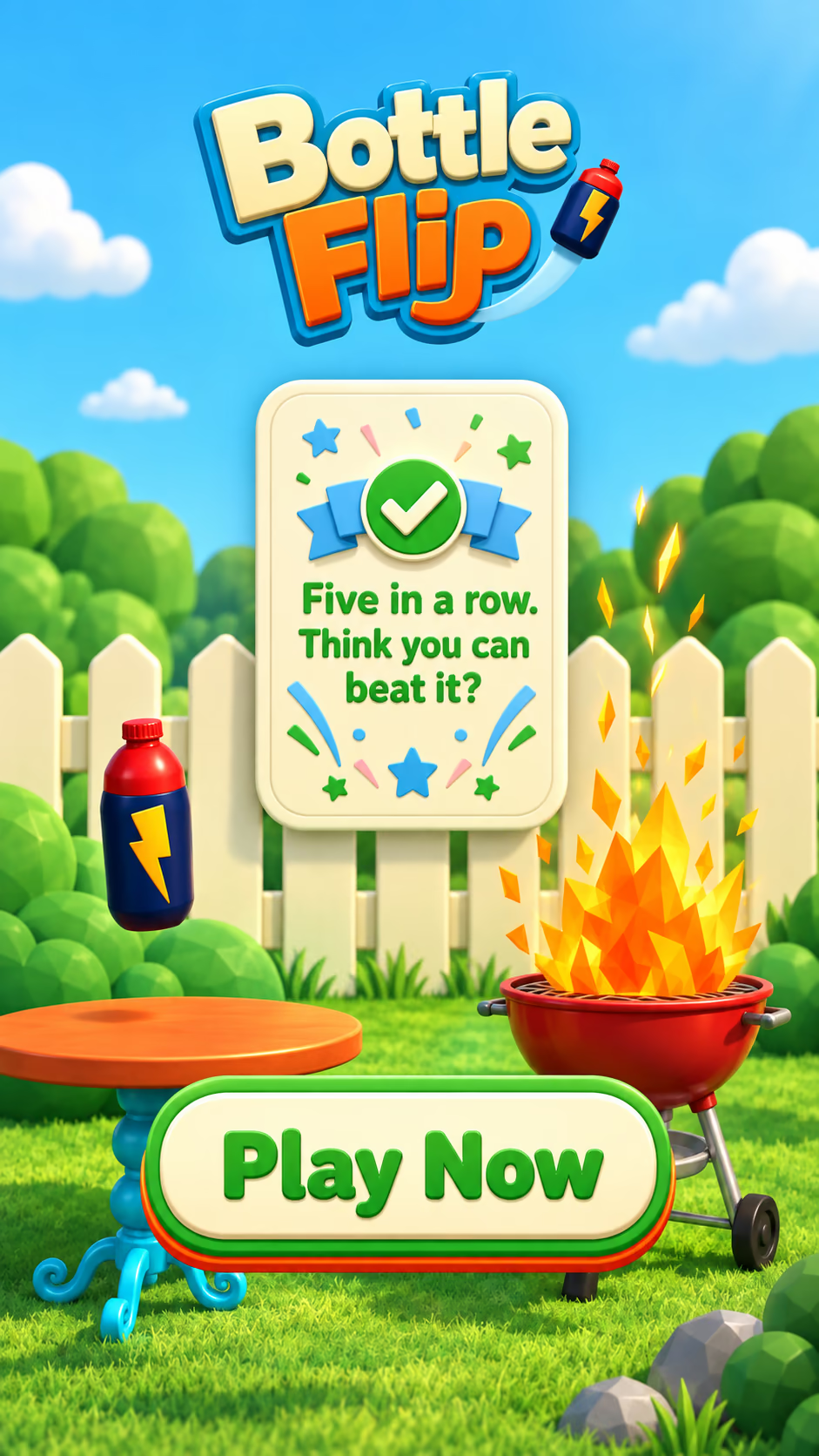
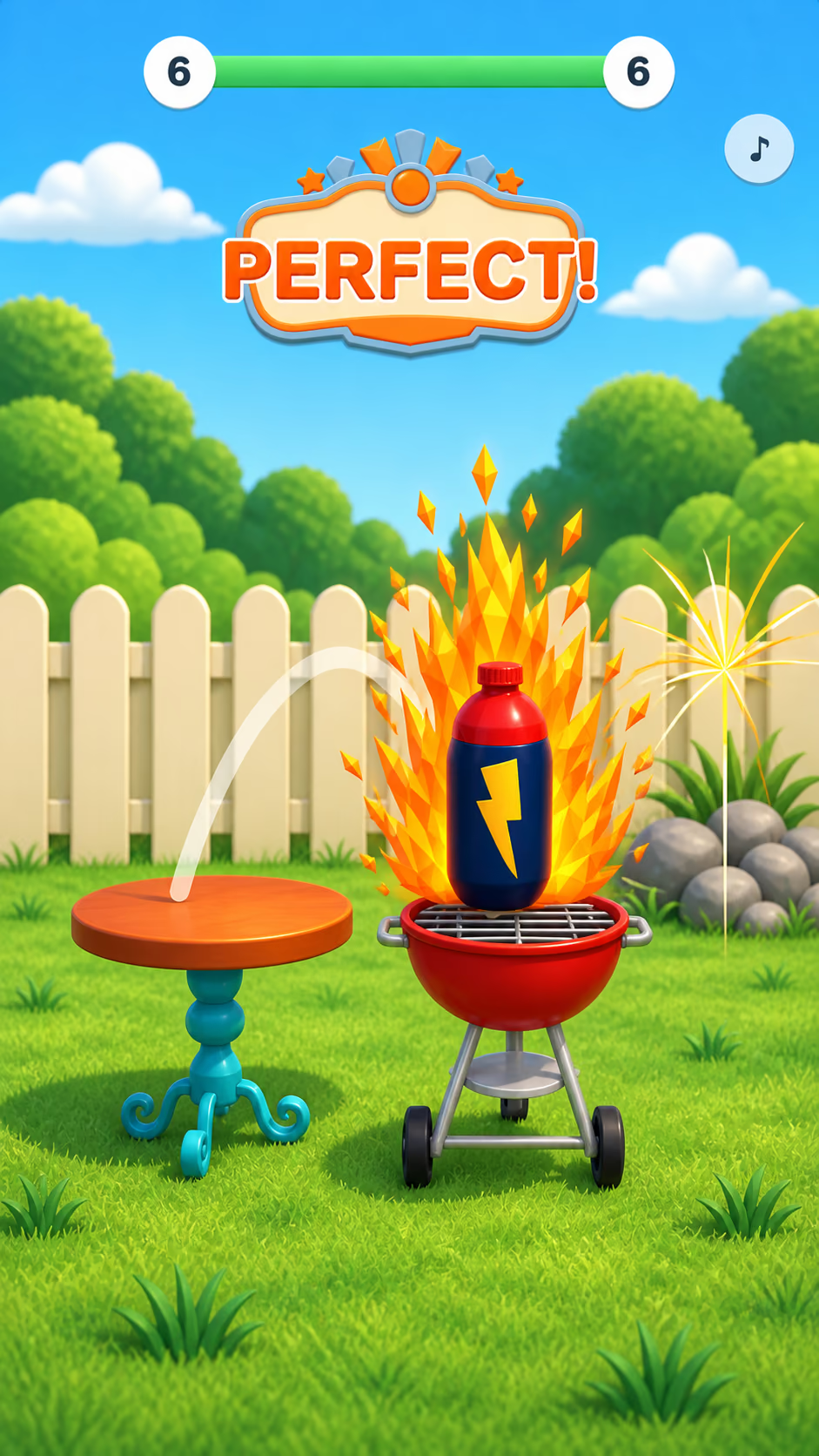
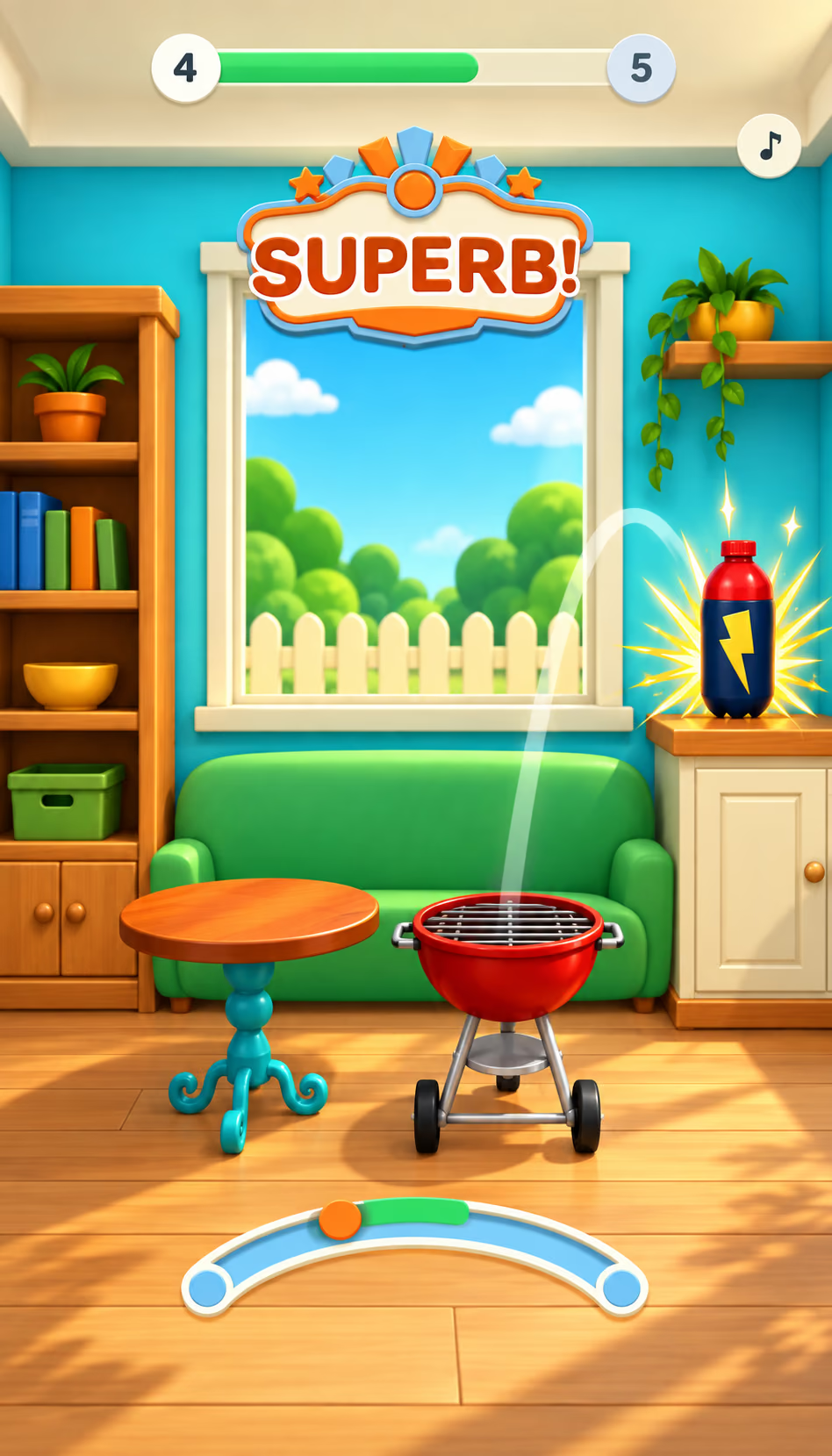
Two frames from the Bottle Flip playable that came out of that first run: the core loop on PamPam's own art, and the end card that sends the player to the store.
How a playable gets made at PamPam now
It starts from something that already converts. Usually a screenshot or a video of one of their own winning creatives, sometimes a competitor's ad worth adapting. The team is translating a proven hook into an interactive format rather than inventing one.
The creative team writes the spec. A few guided questions become a structured brief - core loop, hook moment, end card, tone - which they edit directly before anything is generated. The person who understands why the ad works is the last one to touch it before the build.
"I used to write a document and hope," one of their creative producers says. "Now I answer four questions, play the thing, and say what is wrong with it. That is a completely different job."
Engineers come in last. Concepts arrive as live previews the team can play and reject the same day. Whatever survives is exported as plain, readable HTML, and PamPam's own developers tune the feel and ship the final build. Nothing is locked, which for a studio with real engineering talent is the part that decides whether a tool gets adopted at all.
"The first build is not the part I care about," one of their tech leads says. "What matters is that when I open the export, it is code I can read and change. If it had been a black box we would have run it once for the demo and gone back to doing it ourselves."
If a network sends a build back, it is plain HTML: fix it and resubmit in minutes rather than reopening a ticket. What survives contact with the network then gets reskinned. A concept that performs on Bottle Flip becomes a batch - different themes, different hook lengths, different end cards - and across eight live titles a mechanic that works on one is rarely useless on the others. This is where hyper-casual volume comes from, and it costs a fraction of the first build.
Two of those variants below: the same throw, the same grill, a garden and a living room.
One quarter, four times the volume
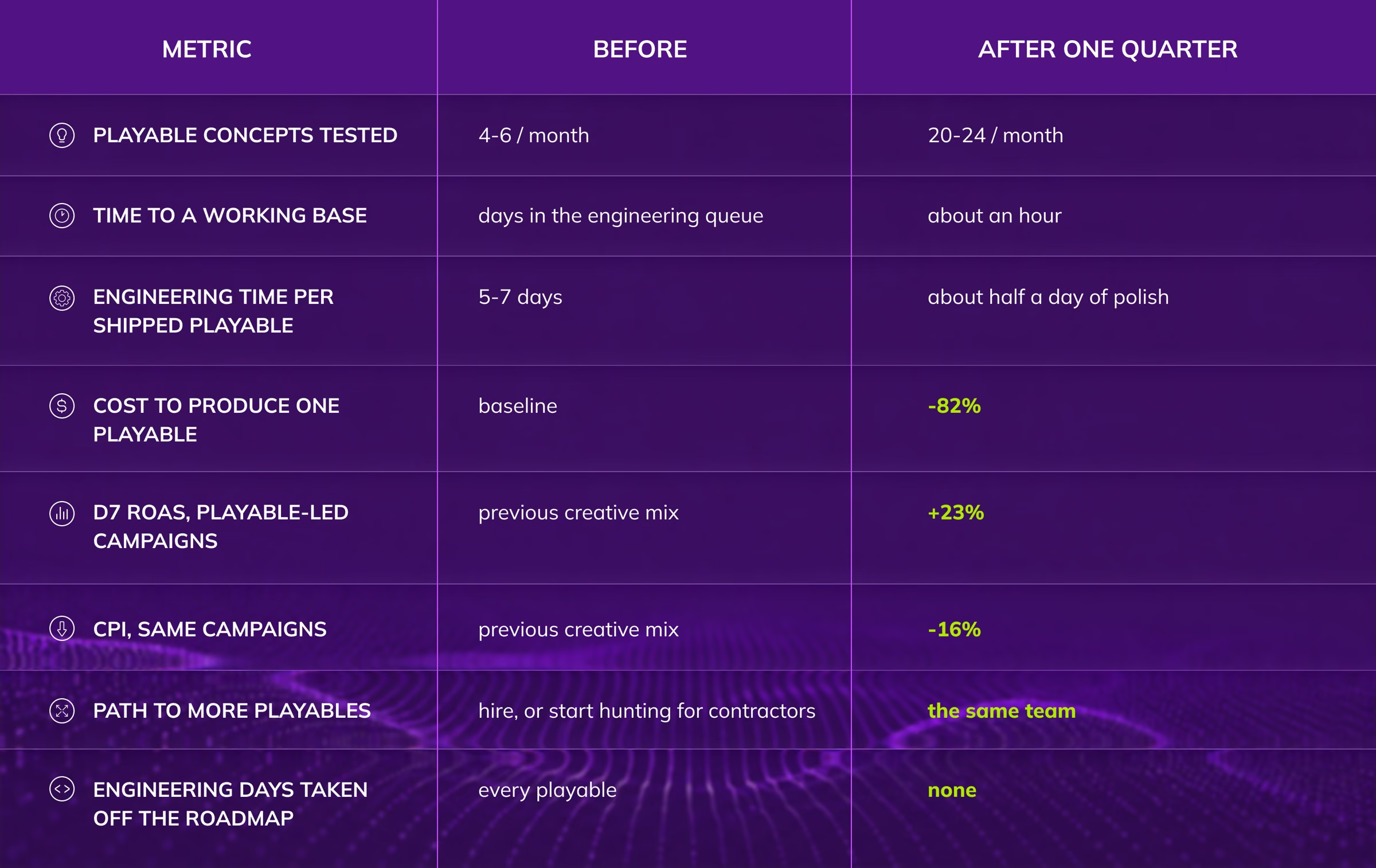
Scope: one quarter, the three titles where playables entered rotation, compared against the previous creative mix on the same campaigns.
The cost line has the simplest explanation. Almost all of what a playable cost PamPam before was engineering time, five to seven days of it. Replacing that with about half a day of polish plus the tool itself is where 82% comes from, counted per concept generated rather than per winner. Nothing was outsourced and nobody was hired.
The ROAS lift running slightly ahead of the CPI improvement is the part the team found interesting. Players who installed off a playable monetized a little better than the video-acquired cohorts on the same titles, which tracks: they had already tried the mechanic before they downloaded it.
None of it came from a cleverer creative. Twenty concepts a month instead of five, and the two that beat the mix stayed in rotation.
A five-second mechanic fatigues in days. Four playables a month cannot keep pace with that; twenty can. The team stopped choosing which playable deserved to exist and started finding out which ones worked.
What actually changed
Engineers still touch every playable. Their work moved to the end. Reviewing and polishing a running playable takes hours where building one took days, so the same people now touch four times as many creatives without four times the work - and the roadmap keeps its capacity, which is the number a CTO is measured on.
The second change is less obvious and probably matters more. When every playable costs a week of engineering, the studio filters ideas before testing them, and it filters them using opinion, because that is all it has before a test exists. When a playable costs an afternoon, the filter moves after the data. In hyper-casual, where the install decision happens in under five seconds, no one's instinct is reliably better than the auction.
The lesson
PamPam's two case studies are the same story from opposite ends. The first was about engineers getting their time back. This one is about what the rest of the studio does with it.
For a hyper-casual studio the point is blunt: creative volume is the growth engine, and anything that rations creative volume caps growth. Playables were rationed not because they underperformed but because they were expensive to make. Once a working base takes an hour, the polish takes half a day, and the finished creative costs a fraction of what it used to, the rationing stops and the format finally gets tested at the tempo everything else already runs at.
Try it on your own creative
Bring a screenshot of your best-performing video ad and you can be playing an interactive version of it in an hour. The source code is yours.
Other Articles
How PamPam increased playable production speed and boosted engineering throughput by 15–25%
From 2 Playable Ads a Month to 12: How GreenPixel Cut CPI by 19% and Finally Out-Tested Creative Fatigue