From 2 Playable Ads a Month to 12: How GreenPixel Cut CPI by 19% and Finally Out-Tested Creative Fatigue
 Alexander Goldybin
GreenPixel's art team already used Code Maestro to compress seasonal reskins from weeks to days. This is what happened when the UA team got the same shortcut, and playable ads stopped being the creative they could never test enough of.
TLDR;
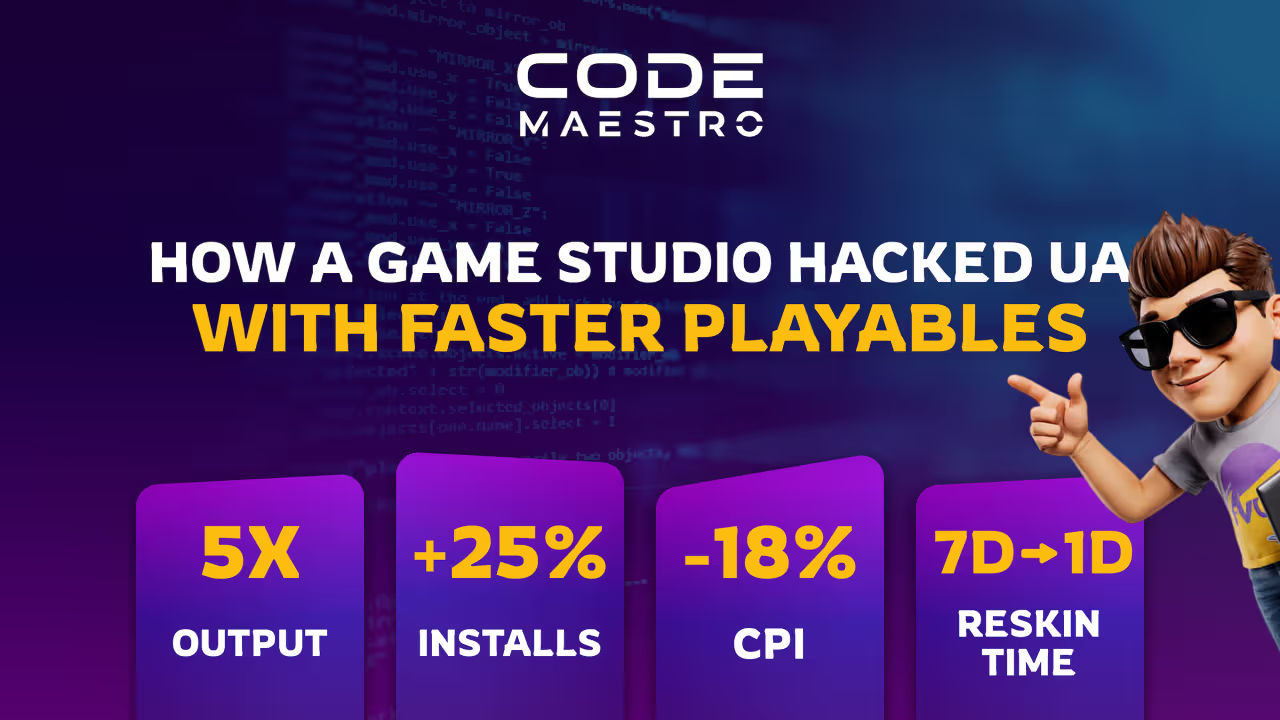
in one quarter, GreenPixel's user acquisition team went from 1-2 outsourced playable ads per month to 10-12 in-house concepts tested per month. CPI across their merge titles dropped up to 19%. Campaigns with playables in rotation delivered 17% more installs. Nobody was hired, no agency was briefed, and writing code became a choice, not a requirement.
Who is GreenPixel
If you've read our earlier case studies, you know GreenPixel: a mid-size studio from Limassol, Cyprus (80+ people), makers of Merge Matters and Merge Hotel Empire - the merge hit that later joined Moon Active's portfolio. They compressed event reskin prep from roughly two weeks to 2-4 days and doubled their seasonal output without expanding the team.
That work lived with the art and LiveOps teams. Meanwhile, one floor over, the UA team had a problem the reskin pipeline didn't touch.
The problem: winners die faster than you can replace them
GreenPixel's UA team knew exactly what they wanted to run. Playables consistently outperformed their video creatives; Liftoff's 2025 Mobile Ad Creative Index puts impression-to-install rates for playables at 8-16x those of non-playable formats. The team had a backlog of concepts: a competitor mechanic worth adapting, a hard-level moment worth turning into a hook, a merge chain that demoed beautifully in 15 seconds.
What they didn't have was a way to make them.
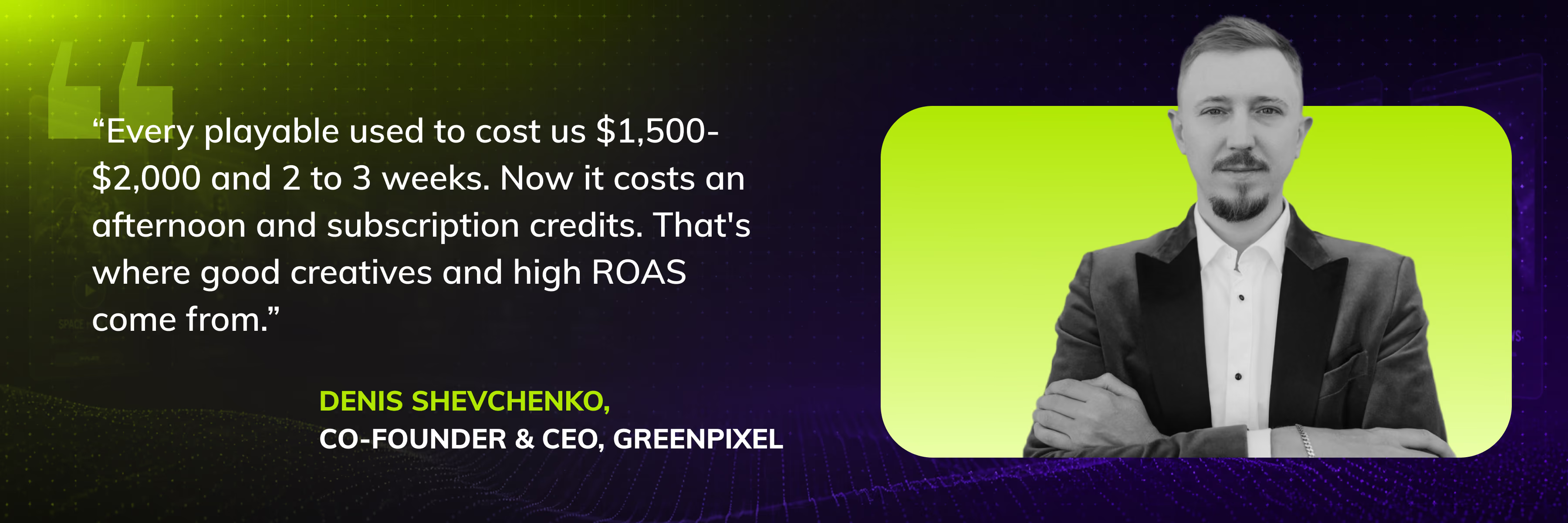
Every new playable ad meant a brief to an external studio: $500-2,000 per unit and one to three weeks of turnaround. By the time a concept came back, one of three things had happened: the hypothesis had gone stale, the winning video it was meant to support had already fatigued, or the market moment (a seasonal spike, a competitor's soft launch) had passed. So the team rationed. One, maybe two new playables a month. Test budgets sat waiting on production.
"We were A/B testing everything except the one format that actually moved CPI," is how their Head of User Acquisition puts it. "We had plenty of ideas. Every one of them cost four figures and a three-week wait before we saw a single metric."
We hear this pattern from UA teams more than any other: ideas and budget are fine, production is the bottleneck.
The turning point: a screenshot, not a brief
The art team's results with Code Maestro made the internal pitch easy. The question was whether a marketing team could own playable production end to end. No Phaser, no JavaScript, no engineering support.
Their first test was great. A UA manager dropped a screenshot of a publicly available top-performing merge ad into Code Maestro's web editor as a creative reference, answered a handful of clarifying questions, and hit generate. Minutes later she was playing an original concept in her browser, built on GreenPixel's own art rather than redrawn approximations of it. After about 1.5 hours she had finished creative.
The same brief, sent outside, would have been a two-week wait and a four-figure invoice.
Some of playable examples
Original game The playable GreenPixel's team built first, the one everything else reskins from.
Halloween seasonal reskin, built in about 40 minutes Same puzzle, same core loop, dressed for Halloween.
The new workflow: how GreenPixel makes playable ads with Code Maestro
The process the team settled into looks nothing like a production pipeline.
Start from what converts. Almost every concept starts from a reference: a screenshot, a video, a store link, or a plain-text prompt. Top-performing ads from their own portfolio and the wider merge market become creative references for original concepts instead of unreachable benchmarks.
Shape it up front. For concepts that need precision, the guided flow turns a few quick answers into a structured game design brief (core loop, hook moment, end card, tone) that the team tweaks before generating. For fast exploration, one click rolls every parameter at once. Producers who "aren't creative producers" stopped being blocked by the blank page.
Test the idea before spending on it. Every generated concept is a live, playable preview, shareable by link. The team plays each one, annotates what's off, and kills weak concepts in minutes. Only the ones that survive internal play-testing move on.
Ship it network-ready. Survivors go to the desktop app for final polish and come out as a single HTML5 playable ad file or as export-ready assets for Meta, AppLovin and Unity. Their own assets, untouched: no AI redrawing, no "those aren't our cubes" surprises in the metrics.
Open code when you want it. The workflow is no-code, but not closed-code. For one concept, the team wanted behavior beyond the standard flow, so they downloaded the HTML source and had a developer hand-tune it. One afternoon of work on a running playable, instead of building one from scratch. Both paths shipped: most creatives fully inside Code Maestro, one polished by hand from exported code.
The results: one quarter of playable-first UA
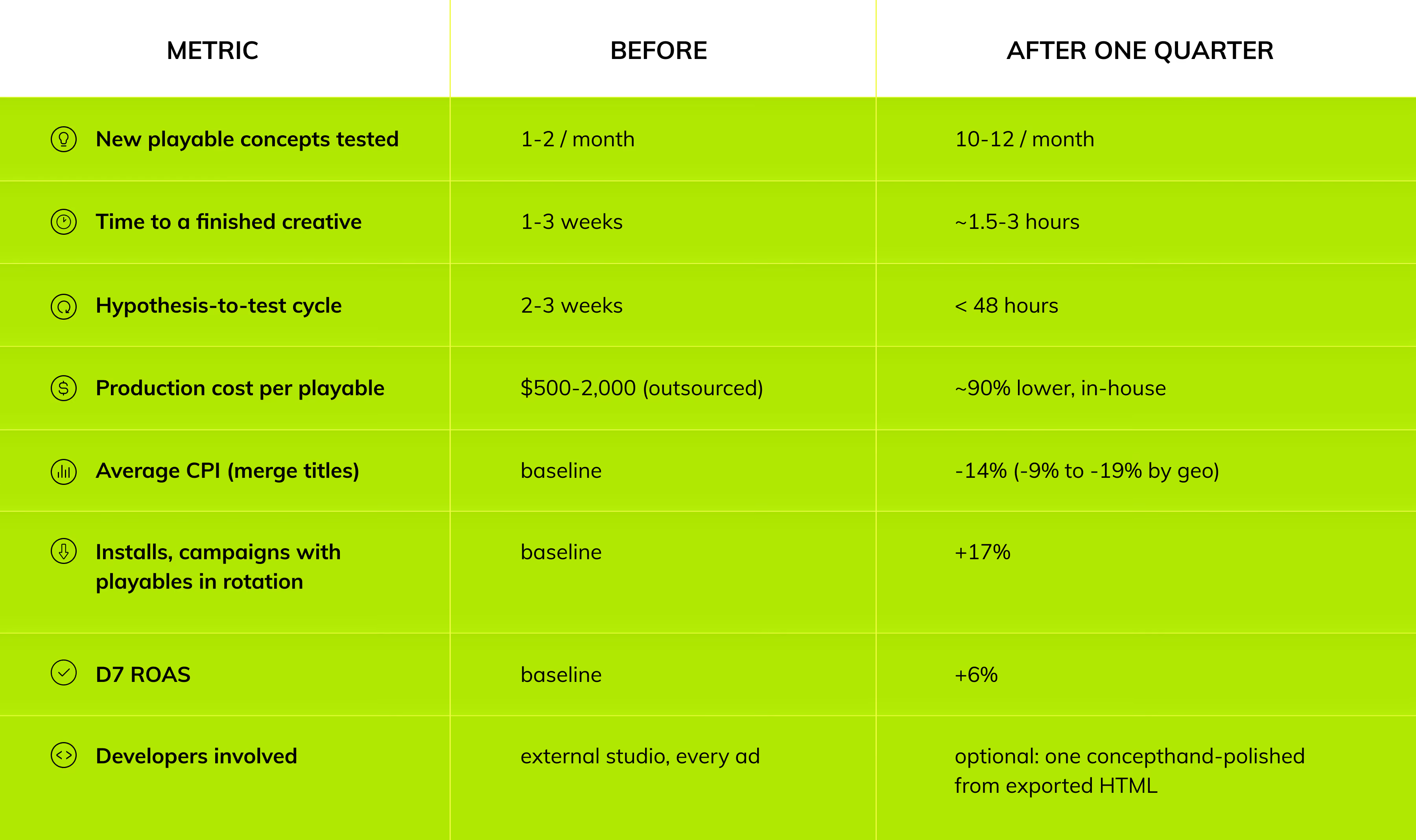
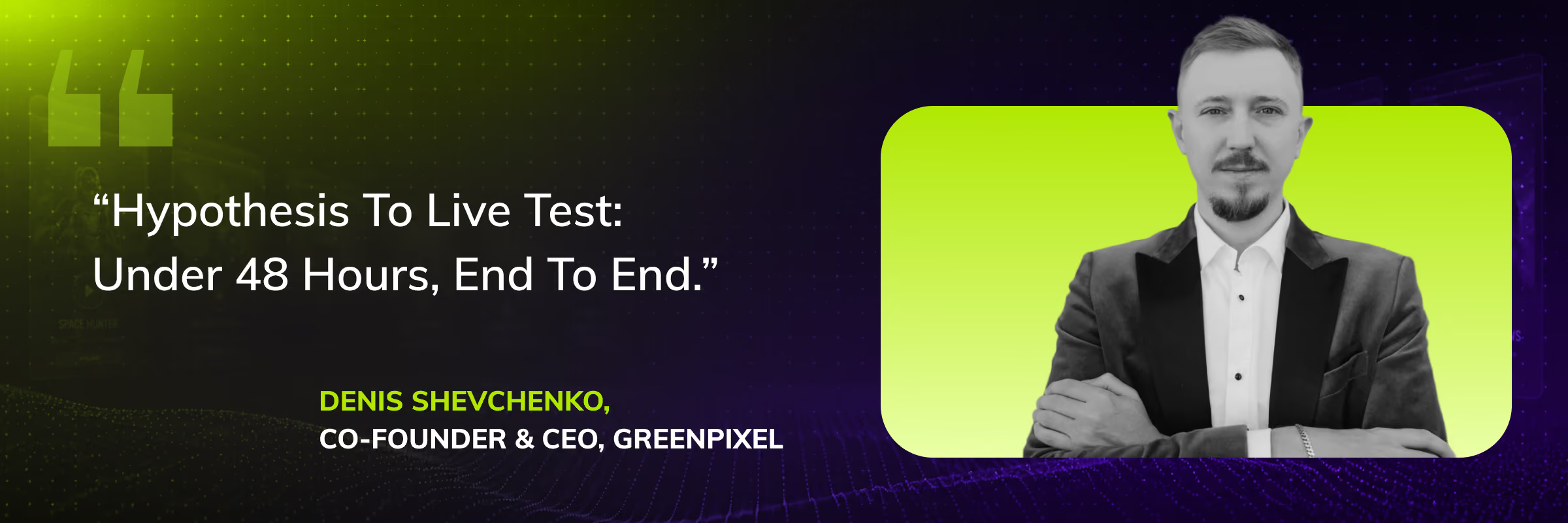
The CPI number is the headline, but the team attributes much of the improvement to the volume number. At 1-2 playables a month, every launch was a bet that had to win. At 10-12, they run playable ads the way they always ran video: as a portfolio. Weak concepts die cheap in 48 hours; winners get variation batches - a skill the team had already sharpened in the seasonal reskin program, where one theme routinely spins into 5-8 playable variants.
"The math flipped," says the Head of UA. "A failed playable used to cost us $1,500 and three weeks of waiting. Now a failed playable costs us an afternoon. Once failure is cheap you test enough to actually find outliers. That's what moved our CPI, not any single genius creative."
Why it worked
None of this worked because "AI made the ads." It worked because of what got removed from the loop.
The team's testing velocity was always limited by the slowest step, and the slowest step was the vendor. Removing the external production loop made each playable cheaper, but the bigger effect was that testing started running at the speed of the team's own decisions, not their vendor's queue. It helped that a reference now does the job a brief used to: writing a spec precise enough for an external team is a skill and a tax, while dropping in a screenshot of the thing you want collapses the distance between "we should try this" and "it's in the ad account."
The last piece is trust in the numbers. Because playables run on GreenPixel's actual art and gameplay feel, test results transfer: what wins as an ad reads as the game.
The takeaway
GreenPixel's story across three case studies is one arc: production capacity is the hidden ceiling on growth. First seasonal events, then ad variations, and this quarter the ceiling came off the highest-performing format in mobile UA.
Playable ads outperform static and sometimes even video formats; that part was never in question. The question was whether a UA team could afford to test them like they test everything else. Now the answer is yes. A playable built in an afternoon gets tested like everything else, and at 10-12 concepts a month the outliers show up on their own.
Want to run the same experiment?
Sign up, drop in a reference, and play your first concept today.