Code Maestro now runs on Claude Opus 4.8 - sharper Unreal copilot, smarter playable ads
 Alexander Goldybin
Anthropic's strongest agentic model - now powering every Unreal investigation, every Blueprint explanation, and every playable ad Code Maestro generates for you. Same price. Sharper judgment.
What just landed
On May 28, 2026, Anthropic released Claude Opus 4.8. It's the model behind Code Maestro today.
For most teams, model upgrades happen in the background - a fix here, a benchmark bump there. Opus 4.8 is different. It changes the quality of what an agentic copilot can do on real production work: read a codebase, propose a change, execute it, catch its own mistakes before you do.
This release is a quiet step up across the board, and a meaningful one for game dev specifically. Here's what changed, and what it means for the way you use Code Maestro.
What Opus 4.8 is better at
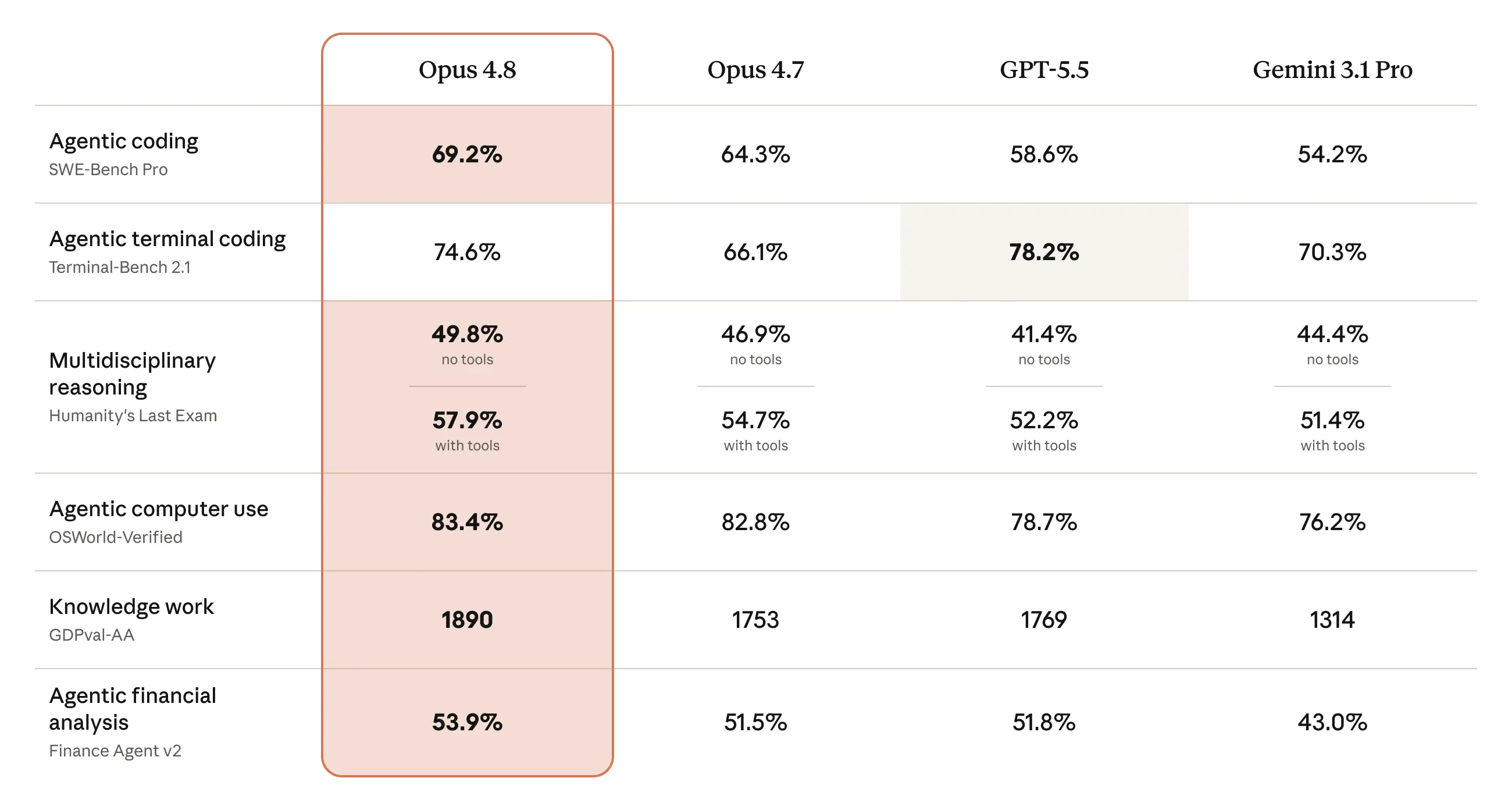
The benchmark numbers tell one story. The qualitative change tells another, and that one matters more for daily work.
Stronger judgment
Early testers across coding harnesses, legal tools, and agentic browsers report the same pattern - Opus 4.8 asks the right clarifying questions, catches its own mistakes mid-flow, and pushes back when a plan isn't sound. For a copilot that operates inside your project (not just answers questions about it), this is the difference between an assistant you have to babysit and one you can trust to carry a task end-to-end.
More honesty
Anthropic's evaluations show Opus 4.8 is roughly four times less likely than its predecessor to let flaws in its own code pass unremarked. Instead of confidently shipping something half-broken, the model flags uncertainty - "I'm not sure this Blueprint event fires in the case you described, let me verify" - and surfaces it for you. For Code Maestro, where users often act on the copilot's output without re-reading every line, this raises the floor on trust.
Cleaner tool use
Tool calling is more efficient end-to-end - fewer steps, the same intelligence. For Code Maestro that means System Explorer investigations finish faster, AI-driven Project Changes touch fewer files than they need to, and agent-driven playable generation reaches a working artifact in fewer iterations.
Best-in-class computer and browser agent
On OSWorld-Verified, Opus 4.8 scores 83.4% - the strongest agentic computer-use result of any model. It stays reflective and on-task across long sessions. For Code Maestro's playable-creator workflow, where the agent orchestrates canvas, runtime, and asset generation in one window, this directly improves how reliably "build the layout, then add the mechanics" runs to completion.
Same price
Anthropic kept Opus 4.8 priced the same as Opus 4.7. No pricing change for you inside Code Maestro either. You get the upgrade by opening the app today.
What this means for Unreal
A few weeks ago we shipped first-class Unreal Engine support - Project Understanding, System Explorer, Graph Intelligence, AI-driven Project Changes. Opus 4.8 makes every one of those features measurably sharper.
Project Understanding pulls a fuller picture
Opus 4.8 holds more architectural context across long sessions - so when you ask "walk me through the inventory system" two hours into a working session, the answer is still grounded in the project you connected this morning, not a generic UE explanation.
System Explorer's Magic Button is faster and tighter
Fewer redundant file reads, faster handoffs between code and Blueprint analysis. On large UE projects with deep dependency trees, this is the difference between a coffee-break investigation and a minute-and-a-half answer.
Graph Intelligence handles dense Materials and Niagara graphs better
This is where Opus 4.8's reasoning lift shows up most cleanly. Reading an 80+ node Material now produces an explanation that walks you through the input parameters, the per-platform optimization, and the actual visual effect - in plain English, in seconds. Same for complex Blueprints that mix C++ calls with BP-only event chains.
AI-driven Project Changes are less "shotgun," more surgical
Cleaner tool calling means the agent touches the minimum number of files needed to make the change you asked for. If you ask Code Maestro to swap a material on a single ruin, it modifies that material - not three unrelated assets it noticed along the way. The honesty improvement also matters here: if the change can't be made safely (a referenced asset is missing, a Blueprint node would break), the agent says so up front instead of shipping something half-broken.
For Unreal teams already using Code Maestro on existing projects - handover scenarios, debugging across BP and C++, designers editing the game directly - Opus 4.8 raises the ceiling on what you can hand off to the copilot without supervision.
What this means for Playable Ads
The playable-ads workflow in Code Maestro is where the agentic improvements compound most visibly.
The agent reads the canvas more accurately
Better judgment means the model is less likely to misread your reference video, less likely to invent assets that aren't there, and more likely to ask "do you want match-3 mechanics or merge mechanics?" before generating 200 lines of runtime code. For UA marketers iterating on creative angles, that single clarifying question saves a full regeneration cycle.
Asset Studio generations are more controllable
Tighter reasoning on prompt adherence means the twelve-sprite batches you ask for actually share style, scale, and color treatment - not "mostly, except for that one sprite that looks like a different game." When the agent does miss, it tells you which assets to regenerate instead of asking you to spot it.
End-to-end "concept to network-ready bundle" is more reliable
Opus 4.8's improvements on long-running agentic tasks show up directly in the path from "drop a reference video" to "AppLovin-ready bundle exported." Fewer mid-flow stalls, fewer "let me try that again" moments. For the One-Click Flow we're rolling out next, this is the foundation.
For agencies and UA teams pushing variations through Code Maestro, Opus 4.8 means more shipped variations per hour and fewer that you have to throw away.
Try it now
If you're already on Code Maestro, open the app - you're on Opus 4.8 already. No setting to flip, no upgrade tier to pay for.
If you haven't tried Code Maestro yet, this is a good week to start.
Get the upgrade by opening the app
Claude Opus 4.8 is already powering every Code Maestro workflow - Unreal investigations, Blueprint analysis, AI-driven changes, and playable ad generation. Same price. Try it now.